Two years after becoming Uzbekistan’s first technology unicorn, Uzum established a $2.3 billion pre-money valuation reference point following an investment of more than $130 million in March led by sovereign entities of the Sultanate of Oman.
The transaction reflected growing international confidence in Uzbekistan’s digital economy and demonstrated that Central Asian technology companies can attract significant global capital. More broadly, it signaled the emergence of a new competition across Asia and beyond – a race to attract, develop, and retain the talent needed to build a thriving cognitive economy.
In an era when economic power is increasingly defined by innovation, technology, and human capital, notions of what constitute competitive advantages are changing. Uzbekistan is trying to change with the times, aiming to transform itself from an economy shaped by the export of commodities into a modern hub for entrepreneurship, digital innovation and high-value manufacturing.
Uzbekistan is a landlocked country sitting at the crossroads of historic trade routes. With a population of about 39 million , more than half of which is under 30, the country has an advantage many developed economies increasingly lack: a large and growing talent pipeline.
Of course, to maximize this competitive advantage, officials must ensure that education, skills development and employment opportunities keep pace with a population growth rate that sees the country adding about a million new citizens every year.
There are some encouraging initial signs that Uzbekistan can succeed in meeting this challenge. For example, StartupBlink ’s recent rankings have highlighted the country’s growing position among emerging startup ecosystems. Hundreds of startups now operate across fintech, e-commerce, artificial intelligence, logistics, and digital services. The emergence of Uzbekistan’s first technology unicorn, Uzum , signals that the country’s entrepreneurial ambitions are producing firms capable of creating jobs and competing beyond regional markets.
But to fulfill the job-creation task, much more is needed to improve the country’s educational base.
While geography still matters, institutions, connectivity, and human capital matter more. The global economy now prioritizes capability just as much as cost. While cheap labor once attracted foreign investment, today’s investors seek skilled software engineers, researchers, and professionals who add value and can create sophisticated products and services.
Over the past several years, Uzbekistan has pursued reforms to open markets, digitize public services, encourage entrepreneurship, expand international partnerships and invest in infrastructure. But the country should remain cautious. Startup rankings can rise fast, and a handful of successful firms does not automatically create an innovation economy.
Retaining skilled workers is challenging, venture financing is evolving and investors will focus on regulatory predictability and institutional quality. These challenges are common in successful innovation hubs. The key question is whether a sustainable innovation ecosystem is being established in Uzbekistan.
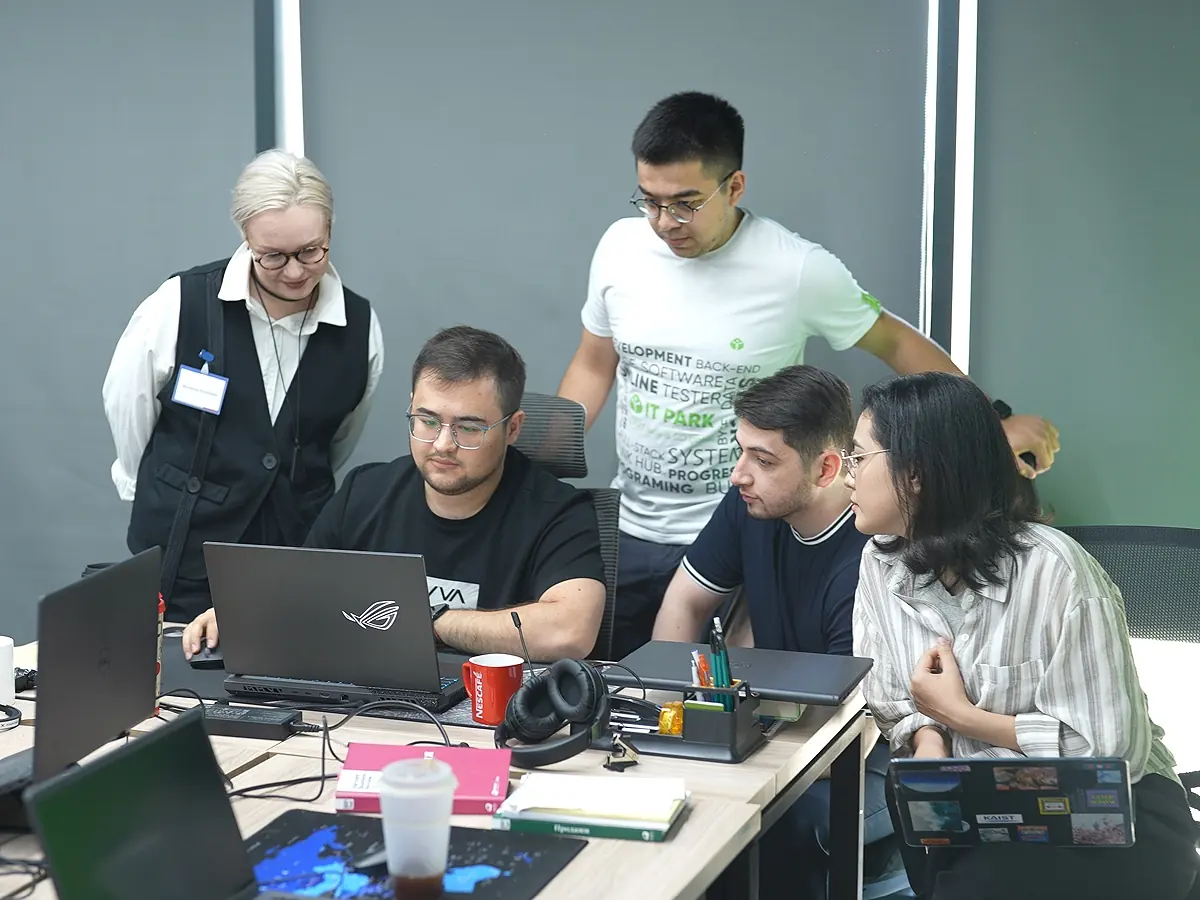
One place to look is IT Park Uzbekistan , which has become one of the region’s most active technology ecosystems. Its rapid expansion includes a growing number of export-oriented firms, foreign-invested enterprises and international technology companies. More importantly, this growth is now extending beyond Tashkent, with foreign and export-oriented companies establishing operations in Uzbekistan’s regions.
The challenge extends beyond simply creating startups; it involves cultivating an environment where entrepreneurs can learn, build, experience failure, and rebuild. A resilient and competitive ecosystem develops when businesses, universities and policymakers collaborate. Innovation ecosystems flourish when talented individuals can establish successful careers and companies locally, while maintaining ties to global markets.
Long-term competitiveness is changing and transitioning into a new equation. Cheap labor and tax incentives once won investment. Now investors chase talent density, and companies go where they can find software engineers who can build products for global markets.
In Uzbekistan, a pressing question is whether the necessary foundation is being established to shift policy priorities from subsidies toward strengthening institutions, particularly within the higher education system. According to data compiled by C-BERT , the country is now among the world’s largest hosts of international branch campuses, trailing only China and the UAE, with 32 foreign universities among its 207 higher education institutions.
International campuses from Russia, South Korea, the UK, the US, Singapore, Japan, India, and other countries have helped create a globally connected academic environment. Uzbekistan continues to expand its international education footprint. The government plans to attract branches of top-100 global universities . In July 2026, a proposal was presented to the president for a dedicated International University Campus in Tashkent, modeled on Qatar‘s Education City and South Korea‘s Incheon Global Campus .
The true measure of progress will not be the number of graduates or universities, but the extent to which knowledge and skills are converted into new technologies, productive businesses, stronger institutions, better public policy and practical solutions to economic and social challenges in Uzbekistan.
Achieving this will require much closer collaboration between universities and industry, along with no-strings-attached government support. As policymakers consider the next phase of reform, they should view research excellence and university capacity, alongside support for startups, as essential innovation infrastructure. The next stage of Uzbekistan’s transformation should therefore focus not only on widening access to higher education, but also on repositioning universities as engines of innovation, applied research, entrepreneurship and regional development.